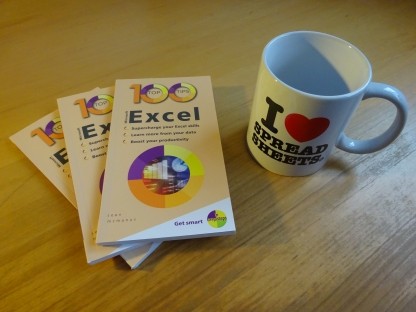
100 Top Tips: Microsoft Excel
Power up your Microsoft Excel skills with this powerful pocket-sized book of tips that will save you time and help you learn more from your spreadsheets.



16 March 2026
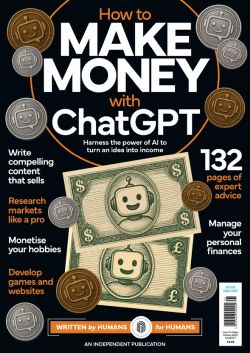 How to Make Money with ChatGPT is out now, and can be found on the magazine racks in newsagents. It shows readers how to use ChatGPT to create products and services that they can sell.
I contributed chapters on building website templates, simple web apps, and Python tools. I also wrote tutorials on creating calendars with creative prompts, prompt engineering services, and making Excel templates for business that you can resell.
Across the projects I worked on, I found that AI was an accelerator but it took a lot of work and refinement to achieve a useful result. It was interesting to experiment, and I often found that I was nudging up against the limits of what the tool could achieve. For the programming tasks I found that my own experience, in both web design and Python programming, were essential for steering the AI in the right direction. In Python, I created a program that takes your photos and videos, sorts them by date, date-stamps each clip, and builds a single video of them all. This is something I used to do manually each year to record family memories, but which will be easier to achieve now with AI.
I've published demo files from the book online so you can see the results I was able to achieve, and can try the code. Really, though, the book is about showing you how you can create your own unique outputs that exactly meet your needs.
The process that the book demonstrates and the outcomes achieved apply equally to other AI tools, so if you have a preferred alternative to ChatGPT, it's still worth picking up a copy if you're interested in the core ideas.
The book was co-authored with David Crookes and Ryan Butt and published by Anthem Publishing. If you can't find a copy in your local shop, you can order it online.
Find out more about How to Make Money with ChatGPT.
Permanent link for this post | Blog Home | Website Home | Email feedback
04 March 2026
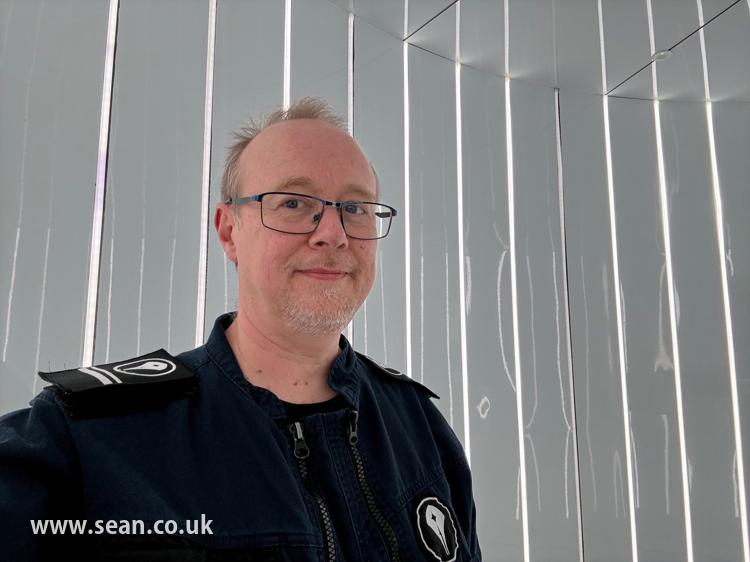 I recently took part in a day-long workshop on immersive theatre, run by the team behind Bridge Command. Subscribers to my newsletter will know that I joined a mission last year and enjoyed it enormously, and that I've previously performed in immersive theatre show You Me Bum Bum Train. This workshop seemed like a perfect opportunity for me to deepen my understanding of immersive theatre, and exercise my improvisation skills.
At the workshop, we learned how to create truly immersive story-driven experiences, and had an opportunity to invent one of our own using one of the Bridge Command spacecraft as our location. (It feels wrong to call them "sets": They feel very real). Based on some of the presentations during the workshop, I have written an article to capture the key lessons about writing immersive theatre.
I think the article is a nice companion piece to my previous events reports covering how to write comedy and how to write for games. Across all three, there was a recurring theme: Story matters.
I've also published a review of My Life Story's December gig at Dingwalls, which appears in this month's Record Collector in an edited form. This was marking 25 years since the release of third album Joined Up Talking (yikes!). The gig was an uplifting celebration of the album, and it seemed like the years fell away.
Permanent link for this post | Blog Home | Website Home | Email feedback
02 March 2026
 One of the best things about Python is that there's a rich ecosystem of libraries you can use that enable you to do things like draw graphs, manipulate PDFs and download data. I put these libraries at the heart of my latest article for The Official Raspberry Pi Magazine, the cover feature about learning Python.
There have been many Python tutorials published over the years. My self-determined mission for this one was to get readers to interesting results quickly. Instead of comprehensively covering all the syntax, I wanted to demonstrate the key ideas and give readers some programs to tinker with. So, we start with a guess-the-year quiz game, which introduces input, loops, variables, lists, and conditional statements. Readers have a game they can customise for any theme, such as sports, music or films.
This leads into a set of short programs, each one demonstrating a different library. You'll see how to twinkle the LEDs on the Sense HAT, draw with the turtle, merge PDFs with PyPDF2, create graphs with matplotlib, watermark images using pillow, and generate colourful QR codes. My favourite program in the collection is one that looks up your carbon intensity using the requests module and the Carbon Intensity API.
When I was starting to learn programming on the Amstrad CPC 464 in the 80s, I picked up a lot by typing in programs from magazines, so I hope that these short examples will prove similarly instructive.
Some of them might also be useful to more experienced Python programmers who perhaps haven't come across these libraries before, or are inspired to extend one of their projects by adding graphs, carbon awareness or feedback though the Sense HAT.
You can read and download all the programs from the article, including enhanced versions of a couple of them.

 Find the magazine in your newsagent or order issue 163 of The Official Raspberry Pi magazine here.
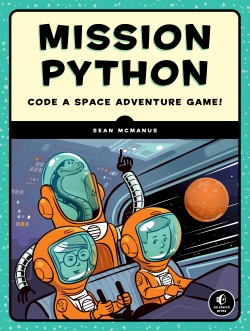
If you want to explore Python further, my book Mission Python shows you how to build a space adventure game, and my free ebook Coding Compendium includes my previous Python tutorials and projects.
I've also extended my Raspberry Pi and Python tutorials with an updated tutorial for the Python turtle, for those who want to explore that module further.
Permanent link for this post | Blog Home | Website Home | Email feedback

© Sean McManus. All rights reserved.
Visit www.sean.co.uk for free chapters from Sean's coding books (including Mission Python, Scratch Programming in Easy Steps and Coder Academy) and more!
Power up your Microsoft Excel skills with this powerful pocket-sized book of tips that will save you time and help you learn more from your spreadsheets.
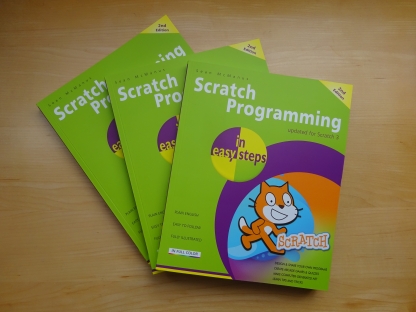
This book, now fully updated for Scratch 3, will take you from the basics of the Scratch language into the depths of its more advanced features. A great way to start programming.
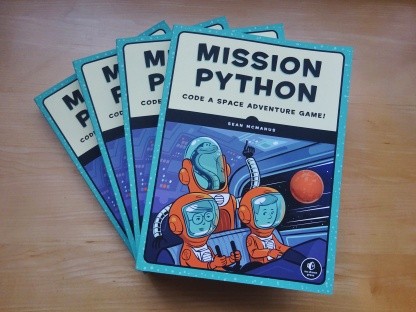
Code a space adventure game in this Python programming book published by No Starch Press.
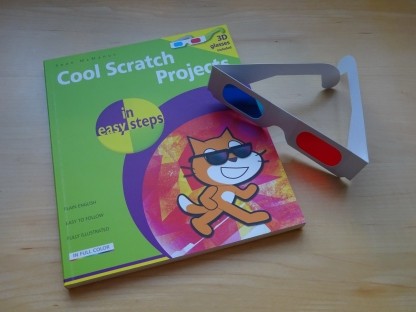
Discover how to make 3D games, create mazes, build a drum machine, make a game with cartoon animals and more!
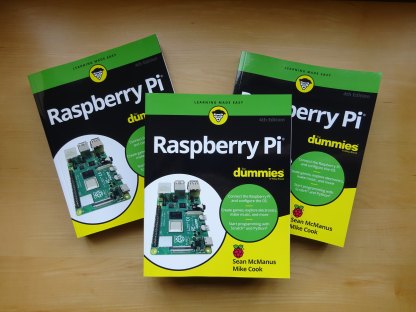
Set up your Raspberry Pi, then learn how to use the Linux command line, Scratch, Python, Sonic Pi, Minecraft and electronics projects with it.
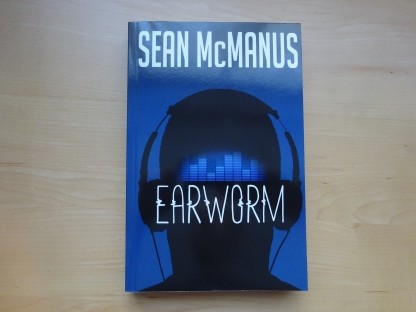
In this entertaining techno-thriller, Sean McManus takes a slice through the music industry: from the boardroom to the stage; from the studio to the record fair.
 Top | Search | Help | Privacy | Access Keys | Contact me
Home |
Newsletter |
Blog |
Copywriting Services |
Books |
Free book chapters |
Articles |
Music |
Photos |
Games |
Shop |
About