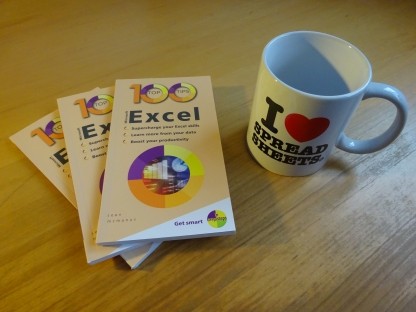
100 Top Tips: Microsoft Excel
Power up your Microsoft Excel skills with this powerful pocket-sized book of tips that will save you time and help you learn more from your spreadsheets.



29 April 2026
 Artificial intelligence (AI) presents an existential challenge to many jobs, including creatives. They're under attack from two sides. On the one side, AI companies are taking their work without permission and using it to train AI models that might replace the creatives. On the other side, the market for their works is being eroded by the influx of AI-generated content.
The flood of AI-generated work is particularly striking in music and photography. Since I created my experimental EP Songs About Coding in May 2024 using AI, a number of AI-generated bands have accumulated a huge number of streams online. When I was looking for stock photos last week, I was struck by how much of the library content was AI-generated.
The government carried out a consultation on copyright and AI, and I was alarmed to see that their preferred position initially was to permit AI companies to use work without permission or payment unless the rights holder opts out. I imagine the government's goal was to attract investment from AI companies, but it severely underestimated the impact on the UK's creative industries, which make a huge contribution to the economy.
I sent an extensive reply to this consultation, including the following: "This proposal is an attack on creators and copyright. The government wants to take one of the fundamental rights of creators away from them: the automatic right to decide who may use and reproduce their content. Giving AI companies the right to use content by default is an extreme contravention of copyright, and represents the state assuming ownership and control of creative work, which it is not entitled to do."
I added: "The use of content for training [AI models] cannot be considered fair use. Modern AI models are derivative products based on the input content, because they cannot exist without the training data, and they reproduce the information in it, and sometimes the expression of that information, too."
The government has since changed its stance to say that its preferred approach is no longer that AI companies can use copyright-protected content without permission, although the question of how AI and creatives will work together and the legal framework around that remains unresolved. As a minimum there needs to be a fair licensing scheme with payments to creatives and a mechanism for creatives to decide whether or not their works are used. The most likely model will be collective licensing, which is already used for secondary royalties such as library loans and copying licences through organisations such as ALCS and the British Library which administers the Public Lending Right.
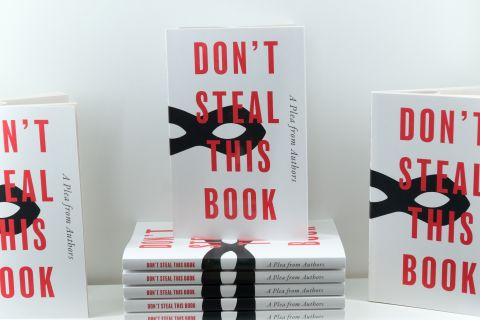
At the London Book Fair, Don't Steal This Book was published. It's blank except for the names of 10,000 authors who are protesting the use of their books by AI companies without consent or payment. My name was among them. One of my books is covered by the Anthropic class action settlement for copyright infringement, and other books were likely used but not covered by the legal terms of the settlement. Other AI companies are also likely to have used pirated copies of my books for training their AI models, based on reports online. Books take at least months and occasionally years to write, and it very much feels like theft when they're exploited in this way.
I've also signed up to the Society of Authors Human Authored scheme, which aims to provide an easy way for readers to validate that books were created without AI. None of my books have been written using AI and I have registered the three titles that qualify for the scheme by reason of their publication dates: Earworm 10th Anniversary Edition, 100 Top Tips: Microsoft Excel, and Web Design in Easy Steps. It will be interesting to see how widespread the icon becomes and whether any major publishers adopt it.
While I have concerns about the impact of AI on the economy and how AI tools have been trained without consent, I take a pragmatic approach to its use. It delivers a huge amount of knowledge, on demand, in an easily consumed way (albeit sometimes with inaccuracies). For research and learning, it's immensely valuable, and it can be a powerful accelerator for ideas. I have used AI, for example, to develop apps I don't have the time, skills or budget to create any other way.
AI is developing quickly, and many creatives will have an uneasy coexistence with it while it provides value to users but continues to exploit those whose work has made it possible.
Many thanks to Matthew Chattle for the photo, taken at the London Book Fair.
Permanent link for this post | Blog Home | Website Home | Email feedback

© Sean McManus. All rights reserved.
Visit www.sean.co.uk for free chapters from Sean's coding books (including Mission Python, Scratch Programming in Easy Steps and Coder Academy) and more!
Power up your Microsoft Excel skills with this powerful pocket-sized book of tips that will save you time and help you learn more from your spreadsheets.
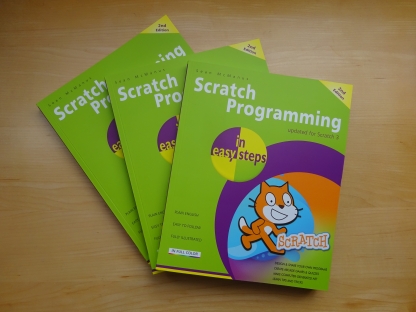
This book, now fully updated for Scratch 3, will take you from the basics of the Scratch language into the depths of its more advanced features. A great way to start programming.
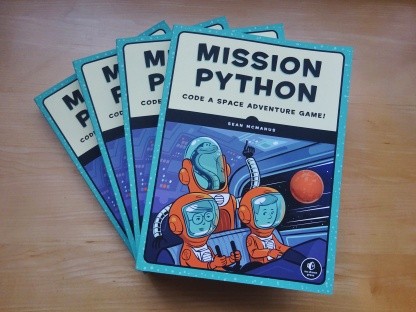
Code a space adventure game in this Python programming book published by No Starch Press.
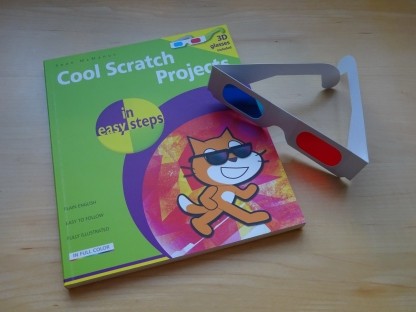
Discover how to make 3D games, create mazes, build a drum machine, make a game with cartoon animals and more!
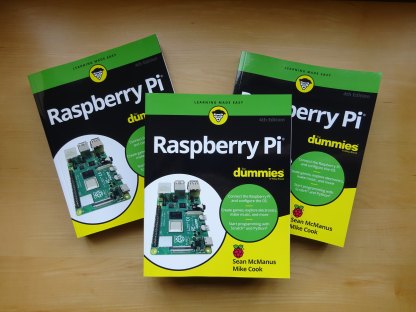
Set up your Raspberry Pi, then learn how to use the Linux command line, Scratch, Python, Sonic Pi, Minecraft and electronics projects with it.
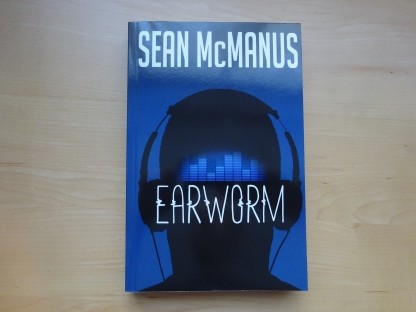
In this entertaining techno-thriller, Sean McManus takes a slice through the music industry: from the boardroom to the stage; from the studio to the record fair.
 Top | Search | Help | Privacy | Access Keys | Contact me
Home |
Newsletter |
Blog |
Copywriting Services |
Books |
Free book chapters |
Articles |
Music |
Photos |
Games |
Shop |
About