How to make ebook apps for the iPhone, iPad and iPod Touch

23 June 2010


Writers Forum June 2010 coverI've just published an article about how you can make ebook apps for the iPhone, iPad and iPod Touch. It's based on interviews with about 20 industry insiders, including bestselling app creators, authors and publishers.

A much shorter version of the feature appeared in the June 2010 issue of Writers' Forum magazine, but I've extended it online with lots of content there wasn't room for in the magazine.

It was an interesting time to be writing the article, because I think it captured a moment in time when it was easy for authors to build apps. It's already become much more difficult, even in the few months since I wrote the story. Firstly, the companies that enabled people to make apps based on RSS feeds have massively increased prices. The entry price used to be $25 and now it's many hundreds of dollars. That probably reflects the demand they've seen from big brands, and might not be a price that the market can sustain in the longer term, at least not without some consolidation in the companies offering those services. For now, with prices that high, you might as well commission a bespoke design (which the article also covers). Secondly, Apple has responded to the number of apps being created by setting much higher standards for approval.

For this project, I did try to create an iPhone app using RSS feeds, but it was unfortunately rejected by Apple for reasons unknown. It might have been a victim of a crackdown on the service I was using, or they might have visited on a day when I hadn't updated the blog for a week or two. With Apple, who knows? The process of making and submitting the app was easy from a technical point of view, but every support query took a week to get a response, and the admin was hard to navigate.

The new iPhone OS and the iPad support the iBook store, so this might create new opportunities for authors to get their content into Apple's handhelds, if they're happy to publish static ebooks. It will be interesting to see what kinds of content Apple decides to approve and reject, and how this changes over time. I suspect that once the catalogue of books is looking reasonably healthy, we'll see a lot of self-published content get deleted and new rules come into play.

To read some success stories from authors who have created apps and find out how you can create your own, see my article. (If you make audiobooks, check out my tutorial on how to get your music into iTunes and Amazon MP3 too. The same concepts apply for audiobooks).

Labels: , , , , , ,

Permanent link for this post | Blog Home | Website Home | Email feedback


The hidden challenge of ebooks: customer service

15 April 2010


Ebooks represent an opportunity for publishers to sell direct to customers, and to bypass the traditional sales channels. There are many reasons they might want to do this: it enables them to build a direct relationship with readers so they can better understand their needs, and it enables the publisher to make a bigger margin on the sale. It creates a massive challenge, though, which is often underestimated: customer service.

I've mentioned the Retro Gamer app a few times on this blog recently. It's an iPhone/iPod app that enables you to read issues of the magazine, which covers computer games from the 80s (or 'retro games'). I used to write games for the Amstrad CPC, so I like to dip into this magazine and the app version is cheaper and more portable than the print mag. The app features a catalogue of all the available issues, and you can use an in-app payment to buy one you want, which then downloads.

When I bought the latest issue, it failed to download correctly. Towards the back of the mag, there are about 10-15 pages that say 'downloading' on them, but which never download. There's no option to reset the download in the app, so the only solution is to file a support enquiry.

This is where the process breaks down: the print magazine has outsourced the whole operation to PixelMags, the company that makes the app. PixelMags says it responds to enquiries by the end of the next business day. But it doesn't: I've sent two enquiries (last Friday and Monday) and had no response to either of them.

As publishers move from print to digital, they need to reorientate their business around customers. Print books rarely have support issues. It's possible a book might be misprinted or wrongly bound, but I can't remember ever returning a book. In that event, the retailer, which has extensive customer service experience, would manage the replacement. In the print world, publishers can basically be creative manufacturers, shipping out crates of books and not worrying too much about end customer service. (They do have retailers as customers, but their needs are very different to readers').

Standardised formats and ebook channels (such as Apple's iBook store and the Kindle store) will help publishers revert to retail-led customer service. But when publishers want to be more innovative and sell iPhone apps or PDFs from their website, they have to make sure they can cope when things go wrong. The content delivery can be automated, but the customer satisfaction cannot. The promise of ebooks is immediate delivery, so customers expect prompt and helpful service.

Because this is an emerging technology, the publisher has more at stake than the reader does. In my case, I'm writing off a £3 purchase of an app, but the publisher is losing annual sales from me of about £30, because I'm unlikely to purchase again.

(Download a free chapter from The Customer Service Pocketbook).

UPDATE: I filed a support request with Apple, and Apple has promptly issued a refund and said it will investigate the issue. So in this case, the retailer was still able to offer an excellent service as support provider of last resort, even though it couldn't fix the downloading issue. As a result, I can continue to have faith in buying apps, although I probably won't buy any more issues from the magazine app.

Labels: , , , , ,

Permanent link for this post | Blog Home | Website Home | Email feedback


Book to the Future: How ebooks will change writing

20 March 2010


Within five years, Wiley's higher education division might be publishing exclusively in digital formats, according to its sales and marketing manager Neil Broomfield. Wiley is the publisher of my book Social Networking for the Older and Wiser, so this is particularly interesting to me. The Older and Wiser series is a good example of a market that will continue to demand print for some time to come, but it's possible we'll see books for many other audiences go exclusively digital.

Since I got an iPod Touch a couple of months ago, I've had a great experience with ebooks on it. I've been using GoodReader to read PDFs. There's a huge amount of content available (legally) in PDF format, including books from Sitepoint, The Pragmatic Bookshelf, and O'Reilly. I've been using GoodReader to read and it's been a mostly great experience, although sometimes it can feel a bit like reading a publication through a letterbox.

There are also some apps dedicated to particular books. I'm enjoying Seth Godin's reboot of Unleashing the Idea Virus, which includes video snippets to help bring it to life. Roger van Oech's Creative Whack Pack is a really nice application too, and there are some great illustrated books including Foxfire (a manga-style cartoon strip) and some apps based on Wallace and Gromit and Shaun the Sheep. Each one of these takes a moment to learn because you turn the page in different ways, so that might be one area where the iPad's support for ebooks can add particular value.

Not all content works perfectly on the iPod. The Retro Gamer app is great, but feels a bit like reading by microfiche. Magazine pages aren't laid out to be read top to bottom, so you end up scrolling all over the place to find the next chunk of content. It costs a fraction of the price of the printed mag, though, so the value proposition is still strong.

I'm also finding that I enjoy the convenience of having multiple publications with me at once, and having them in such a compact form. I've always dipped into and out of books. Most of the time I've got several books on the go, but that's so much easier to do when using a digital reader.

The implications for writers are interesting. Users are coming to expect a little extra in app-based books, so writers need to think about how they can add rich media and interactive features. It's relatively easy to create bolt-on bonuses, but making it integral to the proposition is much harder. The tiny screen size and the way that people dip in and out will also favour books with lots of subtitles and short sections.

One concern with ebooks is pricing. I have seen reference ebooks priced the same as hardbacks, but I'm not sure they're selling in any quantity. The price point tends to be below £3 in the UK, although some titles can push it to £5. It's extremely common to see apps priced at 59p (of which the publisher/author keeps 41p).

The low price point is offset somewhat by the ease with which apps can be distributed. I'll be writing more about this in a while, but it's not too hard for authors to self-publish an iPhone app and tap into all the iPhone and iPod Touch owners out there. Actually driving downloads (even free ones), is much harder, of course, but the challenge of self-publishing has always been in the promotion.

For some time, I've advised that journalists should learn basic HTML. We're still at the stage where learning to build apps is quite technical, but tools are starting to emerge which will help automate much of this. The next generation of writers might need to be more experienced in creating interactive content if they are to connect with readers. Even if they do not need to program, they'll need to be coming up with compelling ideas for apps that readers want.

Labels: , , , , ,

Permanent link for this post | Blog Home | Website Home | Email feedback


The Sun and Daily Mail hoaxed by ghostly iPhone app

05 March 2010


Here's a photo I took at Gloucester Cathedral last year:

Photo of Gloucester Cathedral stained glass windows, with a ghost of a small girl in the foreground

But wait! What's that figure in the foreground? Is it the ghost of a small girl in Victorian clothing, perhaps risen from its burial place beneath the cold stone floor, and destined to walk the corridors in search of rest?

Or have I tampered with the picture?

The answer to that should be obvious, but both The Sun and the Daily Mail were hoodwinked by a similar picture. If you're quick you can read the full Daily Mail article here, and The Sun's story is here. The photo is credited to Hull News & Picture, which says it does "editorial digital photography".

The photographer John Fores is a builder, and took his photo at a school he was demolishing. He claimed that he took photos to record the demolition work, but that the apparent ghost of a boy in a flat cap in one image made "the hairs on the back of [his] neck stick up". He said: "I didn't believe in ghosts, but since I got this picture, I am not so sure."

Fores has clearly been deceptive here: The Mail says that he insists he has not edited the photo, which means they asked him and he denied it. The Sun's picture of him on the building site with his mobile phone shows him with a beaten up old camera phone, and not the iPhone he used to create the image. Derren Brown would be proud of such an artful misdirection.

But surely the press should use more common sense than that? Just because a member of the public says they have a picture of a ghost, that doesn't mean it's true. Even if the story were included as a bit of fluff, its tone could be different. The Sun opens with "A builder demolishing an old school discovered this eerie image of a young boy in a mobile phone picture taken of the site", which effectively endorses the builder's story. The Daily Mail said: "The ghostly image of a young boy was captured on camera as builders demolished an old school building. John Fores, 47, insists the spectral figure was not present when he took the picture..." To use the picture as some light entertainment and keep their credibility, the papers could have taken a more sceptical angle, or even softened their reporting by saying the photographer claims he took the photo normally, rather than just reporting that he did. (There's a guide to handling of uncorroborated statements in the context of press releases, here).

One reason this reflects badly on the newspapers is that many of their readers know exactly how the pictures were taken. Although a lot of people immediately suspected Photoshop had been used, it took just three hours for someone to comment on the Daily Mail that the shot was created using an iPhone app. That app is called Ghost Capture, which costs 59p and enables you to add ghosts to your pictures. It can also be used on the iPod Touch to edit photos loaded on the device. I used the free lite version to make the picture above.

At the time of writing, neither newspaper has corrected their story to make clear that it's fake, which sends a strong signal that they don't care about accuracy or truth. Next time you read a story in those papers, ask yourself whether you are being lied to.

Labels: , , , , ,

Permanent link for this post | Blog Home | Website Home | Email feedback


Dip into the blog archive

June 2005 | September 2005 | January 2006 | March 2006 | April 2006 | May 2006 | June 2006 | July 2006 | August 2006 | September 2006 | October 2006 | November 2006 | December 2006 | February 2007 | March 2007 | April 2007 | May 2007 | June 2007 | July 2007 | August 2007 | September 2007 | October 2007 | November 2007 | December 2007 | January 2008 | February 2008 | March 2008 | April 2008 | May 2008 | June 2008 | July 2008 | August 2008 | September 2008 | October 2008 | November 2008 | December 2008 | January 2009 | February 2009 | March 2009 | April 2009 | May 2009 | June 2009 | July 2009 | August 2009 | September 2009 | October 2009 | November 2009 | December 2009 | January 2010 | February 2010 | March 2010 | April 2010 | June 2010 | August 2010 | September 2010 | October 2010 | December 2010 | March 2011 | April 2011 | May 2011 | June 2011 | July 2011 | August 2011 | September 2011 | October 2011 | November 2011 | December 2011 | January 2012 | February 2012 | March 2012 | June 2012 | July 2012 | August 2012 | September 2012 | October 2012 | December 2012 | January 2013 | February 2013 | March 2013 | April 2013 | June 2013 | July 2013 | August 2013 | September 2013 | October 2013 | November 2013 | December 2013 | January 2014 | February 2014 | March 2014 | April 2014 | May 2014 | June 2014 | July 2014 | August 2014 | September 2014 | October 2014 | November 2014 | December 2014 | January 2015 | February 2015 | March 2015 | April 2015 | May 2015 | June 2015 | September 2015 | October 2015 | December 2015 | January 2016 | February 2016 | March 2016 | May 2016 | July 2016 | August 2016 | September 2016 | October 2016 | November 2016 | December 2016 | January 2017 | July 2017 | August 2017 | October 2017 | November 2017 | January 2018 | February 2018 | August 2018 | October 2018 | November 2018 | December 2018 | January 2019 | March 2019 | June 2019 | August 2019 | September 2019 | October 2019 | January 2020 | February 2020 | March 2020 | April 2020 | May 2020 | June 2020 | September 2020 | October 2020 | December 2020 | January 2021 | February 2021 | May 2021 | June 2021 | October 2021 | November 2021 | December 2021 | January 2022 | February 2022 | March 2022 | May 2022 | July 2022 | August 2022 | September 2022 | December 2022 | March 2023 | April 2023 | May 2023 | June 2023 | October 2023 | November 2023 | January 2024 | February 2024 | May 2024 | June 2024 | July 2024 | September 2024 | October 2024 | November 2024 | December 2024 | January 2025 | February 2025 | September 2025 | October 2025 | November 2025 | January 2026 | March 2026 | April 2026 | May 2026 | June 2026 | July 2026 | Top of this page | RSS

Credits

© Sean McManus. All rights reserved.

Visit www.sean.co.uk for free chapters from Sean's coding books (including Mission Python, Scratch Programming in Easy Steps and Coder Academy) and more!

Discover my latest books

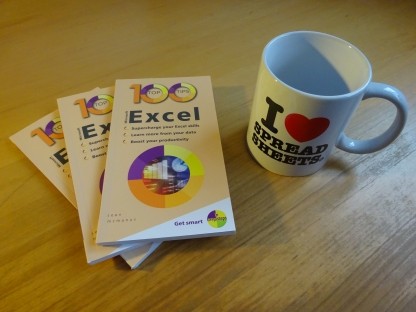
100 Top Tips: Microsoft Excel

100 Top Tips: Microsoft Excel

Power up your Microsoft Excel skills with this powerful pocket-sized book of tips that will save you time and help you learn more from your spreadsheets.

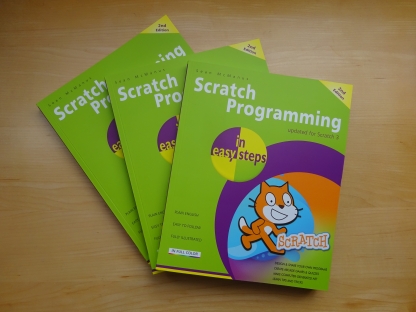
Scratch Programming in Easy Steps

Scratch Programming IES

This book, now fully updated for Scratch 3, will take you from the basics of the Scratch language into the depths of its more advanced features. A great way to start programming.
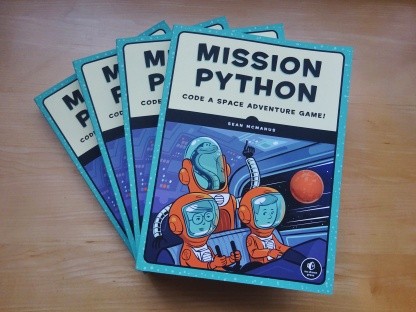
Mission Python book

Mission Python

Code a space adventure game in this Python programming book published by No Starch Press.
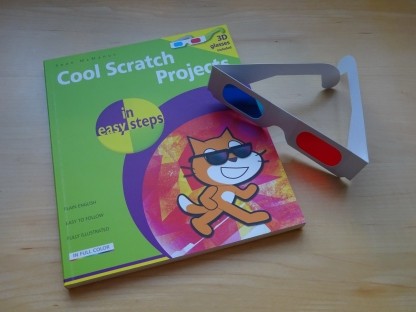
Cool Scratch Projects in Easy Steps book

Cool Scratch Projects in Easy Steps

Discover how to make 3D games, create mazes, build a drum machine, make a game with cartoon animals and more!
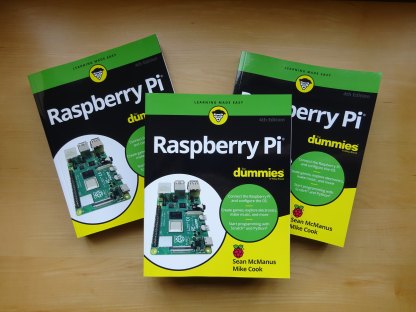
Raspberry Pi For Dummies

Raspberry Pi For Dummies

Set up your Raspberry Pi, then learn how to use the Linux command line, Scratch, Python, Sonic Pi, Minecraft and electronics projects with it.
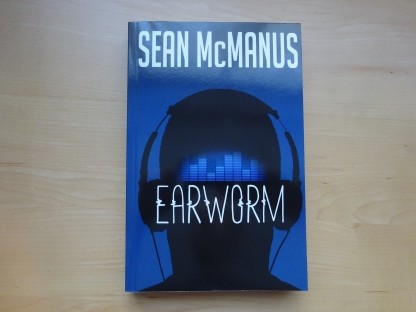
Earworm

Earworm

In this entertaining techno-thriller, Sean McManus takes a slice through the music industry: from the boardroom to the stage; from the studio to the record fair.

Walking astronaut from Mission Python book Top | Search | Help | Privacy | Access Keys | Contact me
Home | Newsletter | Blog | Copywriting Services | Books | Free book chapters | Articles | Music | Photos | Games | Shop | About